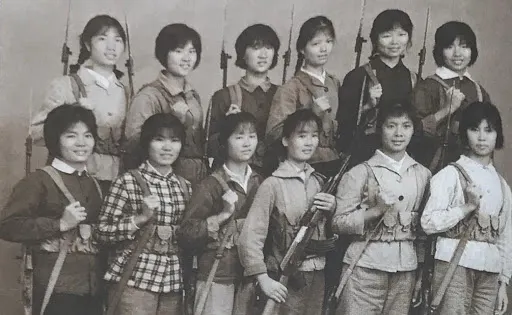
Who We Are
The Cold War is commonly viewed as an international confrontation between the Soviet Union and the United States, which ended three decades ago. With the demise of the Soviet Union in 1991, it has seemed apparent that the confrontation was an event of the past. But what if we view it from a social point of view? What if we see it as myriads of local and social wars that were imagined as one, fought not just among superpowers’ policymakers but among ordinary people within each society? What if we view it as ordinary people’s everyday struggles through which social and cultural orders were contested and regulated in many parts of the world?
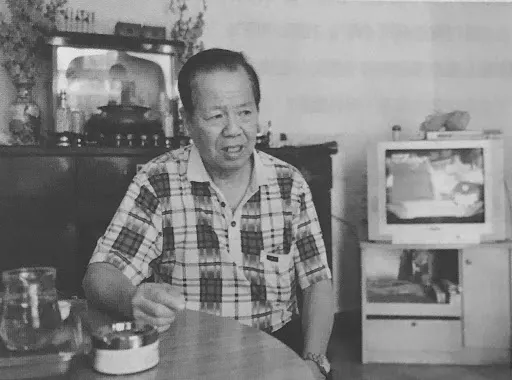
Our Focus
Three decades have already passed since the end of the Cold War, and the frenzy associated with Cold War politics has come to seem odd, if not surreal. Now, the nature of inquiry cannot be the same as in the past. In fact, what is noteworthy in recent Cold War historiography is that the focus of questions has shifted from the Cold War’s origins to its nature. The key question is no longer “Who began it?” but more “How did it work?” and “What was it?” With this point in mind, we have been undertaking an international project, "Reconceptualizing the Cold War: On-the-ground Experiences in Asia," which aims to build an online archive of oral history collections concerning the Cold War and decolonization in Asia, with a particular focus on Southeast, East, and South Asia. Based on oral history interviews and archival research across Asia, we aim to capture the emotions, enthusiasms, and fears of the era, and explores experiences and memories of ordinary people who witnessed various kinds of real and imagined wars.
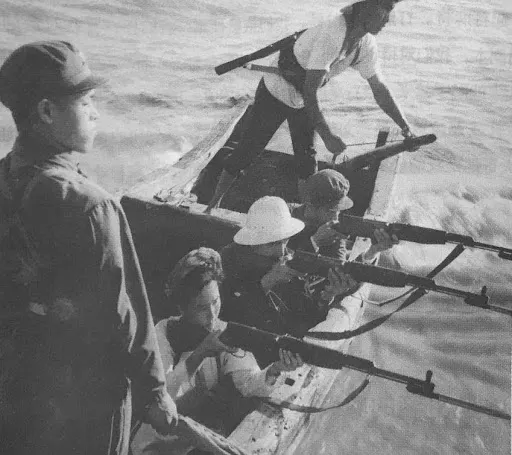
The Archives
Our oral history project—in a sense, an attempt at history from below—will be an important and useful corrective to conventional histories of the Cold War, which have largely emphasized superpowers’ and political leaders’ conduct. Through this project, we draw attention to “many Cold Wars,” or, more precisely, many local and social wars that were imagined as parts of the global Cold War. In doing so, ultimately, our project raises fundamental questions about standard Cold War narratives, encouraging historians and scholars in other disciplines to rethink what the Cold War really was, and why it still matters.
Project Members
Our project's participants—many of them living in the societies they work on and having daily contact with local people—take full advantage of their localness: direct and unparalleled access to local sources, as well as nuanced and prudent attitudes toward local situations and emotions. As such, our participants are able to offer perspectives that could relativize "global" Cold War logic, thus participating in the creation of knowledge and promoting a larger historical trend, often called "decolonizing academia." In this sense, this is not simply a project about history; it is a part of history, in itself, in that it shows how local scholars could turn around trends of knowledge production that have been deeply entrenched since the age of colonialism and the Cold War, and how they can intervene in conventional narratives of the Cold War and decolonization, as well as those of the second half of the 20th century.
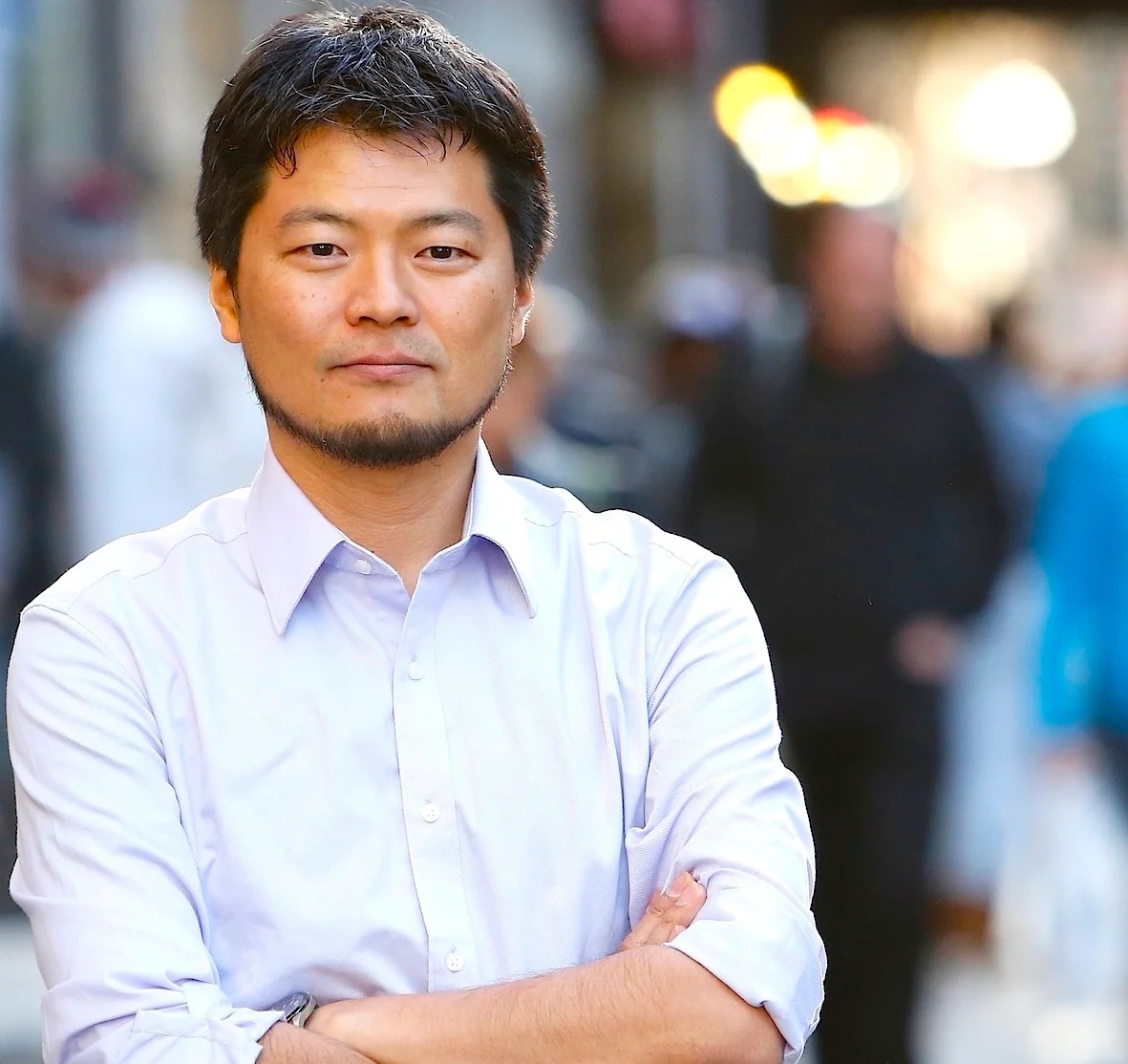
Principal Investigator
Masuda Hajimu (JP/SG)
__Masuda Hajimu__ (family name Masuda) is a historian at the National University of Singapore. He is the author of *Hitobito no naka no Reisen sekai : sōzō ga genjitsu to naru toki (The Cold War World among Ordinary People: When Imagination Became Reality)* (Iwanami shoten, 2021); *Cold War Crucible: The Korean Conflict and the Postwar World* (Harvard University Press, 2015); “The Early Cold War: Studies of Cold War America in the 21st Century” in *A Companion to U.S. Foreign Relations* (Wiley Blackwell, 2020); “The Social Experience of War and Occupation” in The Cambridge History of Japan (Cambridge University Press, forthcoming in 2023), among many others. His areas of concentration are the modern history of East Asia, the history of American foreign relations, and the social and global history of the Cold War, with particular attention toward ordinary people and their violence, as well as the recurrent rise of grassroots social conservatism in the globalized world of the twentieth century. He was a residential fellow at the Woodrow Wilson International Center for Scholars (2017-18); Visiting Fellow at the University of Cambridge (2020); and Visiting Scholar at Waseda University (2020). In 2021, he received the 75th Mainichi Shuppan Bunka Sho (The Mainichi Publishing Culture Prize) and the 21st Osaragi Jiro Rondan Prize.
Postdoctoral Fellows
- Kisho Tsuchiya
- Chien Wen Kung
- Muhammed Kunhi Mahin Udma
Student Researchers
- Megumi Hagiwara (PhD, Taiwan)
- Socheat Nhean (PhD, Cambodia)
- Pa Kuan Huai (MA, Malaysia)
- Jeremy Tan (Undergrad, Singapore)
Student Researchers
Arivarun Anbualagan (SG)
Designer & Developer
Syahrul Anuar (SG)
Student Researchers
- Alvin Bui
- Chen Yishen (China)
- Chen Yiwen (Taiwan)
- Cheng Yimeng (China)
- Chen Yongming (China)
- Chong Ujong (Japan/Korea)
- Stephen Christopher (Japan/Nepal)
- Rina Hong (Japan/Korea)
- Phianphachong Intarat (Thailand)
- Khairunnisa (Indonesia)
- Anna Koshcheeva (Laos)
- Dominique Lucagbo (Philippines)
- Christian Lemuel Magaling (Philippines)
- Robert Moisa (Indonesia)
- Imam Muhtarom (Indonesia)
- Ngatini (Vietnam)
- Juliette Sendra (Indonesia)
- Veronica Sison (Philippines)
- Soeung Bunly (Cambodia)
- Soun Ponleu (Cambodia)
- Appridzani Syahfrullah (Indonesia)
- Siti Zaainatul Umaroh (Indonesia)
- Satriono Priyo Utomo (Indonesia)
Workshop Participants
- Chen Yongming
- Cheng Yi-meng
- Jason Ng Sze Chieh
- Mary Grace R. Conception
- Simon Richard Creak
- Cui Feng
- David E. Gilbert
- Vannessa Hearman
- Paula Hendrikx
- Phianphachong Intarat
- Sujane Kanparit
- Kao Dan-hua
- Hema Kiruppalini
- Prasit Leepreecha
- Luong Thi Hong
- Masuda Hajimu
- Covell Meyskens
- Robert Moisa
- Muhammed Kunhi
- Imam Muhtarom
- Sherzod Muminov
- May Ngo
- Nguyen Diu-Huong
- Uyen Nguyen
- Ricky C. Ornopia
- Mythri P U
- Pa Kuan Huai
- Vatthana Pholsena
- Morragotwong Phumplab
- Elgin Glenn Salomon
- Juliette Sendra
- Sim Chi Yin
- Savina Sirik
- Veronica Sison
- Appridzani Syahfrullah
- Tan Teng Phee
- Kisho Tsuchiya
- Siti Zainatul Umarah
- Mathew Woolgar
- Kinuko Maehara Yamazato
- Bin Yang
- Beiyu Zhang